
Trace Greer Previous Residents
A reliable past-resident trail begins with the era of the address and its parcel county. Greenville County and Spartanburg County keep different online deed ranges, and Greer directory editions have real gaps. Start with the current property card only to collect the PIN or map number, legal description, owner field, and deed clue. Then choose a dated source that fits the period. Recorded transfers track title; directories and telephone books can place a listing at an address; census, newspaper, probate, and obituary material can clarify a household or an endpoint.
| Trail source | Documented Greer-era reach | Keeper or access channel | What it can show |
|---|---|---|---|
| Greenville grantor/grantee index and deeds | 1787-present | ROD online, counter, and Hughes Main microfilm | Recorded transfer, parties, book/page, and legal description. |
| Spartanburg deeds and old index books | Modern copies 1970-present; older deed/index bands documented | ROD portal, counter, phone, or mail copy request | County-side transfers and an older book/index path. |
| Greer directory holdings | 1915-16, 1949, 1963, 1976, 1983-97 annual, selected later Polk editions | Hughes Main archive and Greer reference as cataloged | Time-stamped name or address listings in available editions. |
| Greer telephone books | 1956-59; 1960-86; 1990-95 | Greenville County Library catalog collection | Listed telephone and address correlation, where listed. |
| Federal census | 1950 and earlier public | National Archives and library databases | Released household context when the address or person can be matched. |
| Greer Citizen microfilm | 1922-present list | South Carolina Room | Obituary, sale, civic, or property clues that need page-image verification. |
For a recent title question, begin with the correct county property record and deed. For a household question in a past decade, start with the nearest documented directory or telephone edition, then test it against the deed and census. A blank interval means a gap in the material, not an invitation to invent an uninterrupted address history.
Start Greer Past Residents With PIN
Greer mailing city is not enough to choose a recorder. Use City GIS or the appropriate county map to determine the parcel county, then capture its PIN or map number, parcel location, subdivision, lot, deed book/page, and legal description. The property card may display a current owner or mailing address, but a mailing field is tax correspondence information. It can belong to an owner, trust, agent, or another property and does not establish who lived at the parcel.
Legal description is the dependable bridge when the address format changes. Lot, block, subdivision, plat book/page, or metes-and-bounds language persists in the recorded chain even when an old directory uses a rural route, a shorter street form, or a different city context. City GIS county-line and annexation layers help explain a mismatch, but the map is reference-only. The deed and plat remain the documents to confirm.
Note: No verified citywide Greer street-renumbering date was found, so a name or number mismatch should be checked against plats and county geography.
Greer Deed Records by Era
Previous residents are often discovered through the ownership path, but the two counties have different access patterns. Greenville County Register of Deeds documents grantor/grantee indexes and deed images from 1787 forward. Its pre-1985 branch supplies index books, deeds, land grants, and some mortgages. The modern branch covers post-1985 records and all plats, with deeds from 1940-84 added. For a pre-1990 result, search by book type instead of relying only on modern document categories.
On the Spartanburg side, the Register of Deeds document search supplies Name, Book/Page, Instrument Number, Instrument Types, and Old Index Books modes. The county's ordinary free online-copy statement begins deeds at 1970, while old index and deed-book bands provide older research paths. When an older item cannot be opened online, use the book/page at the counter or make a focused phone or mail copy request. The office requires the requester to identify the document and does not perform title research.
The Spartanburg deed-index entry page is shown here with the county's document-search route.
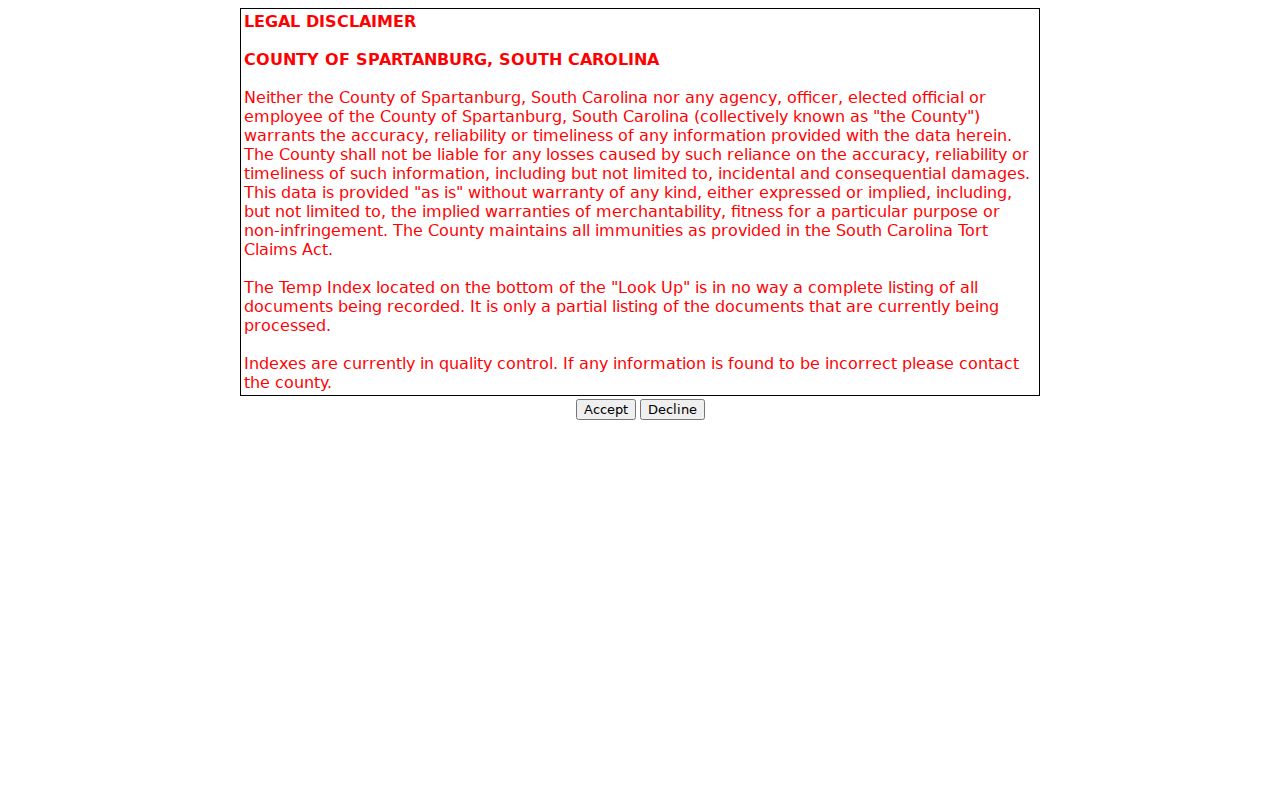
The comparison is useful for a house-history timeline: Greenville's digital depth starts much earlier, while Spartanburg needs the older index/book route sooner for an earlier transfer.
Follow Greer Previous Residents Backward
A chain of title is a sequence of recorded transfers for the same parcel. It should be built deed by deed, not from similar surnames. Begin with the current owner or purchaser shown by the property record and its deed reference. Open the recorded purchase instrument. The buyer in that instrument is the grantee; the seller or transferor is the grantor. Search the grantor as a grantee in an earlier period, using the legal description and book/page references to test that it is the same parcel.
- Record the current county, PIN or map number, parcel location, legal description, subdivision or lot, and the latest deed book/page.
- Open the current purchase deed in the correct ROD and note its grantee, grantor, recording date, instrument number or book/page, and legal description.
- Search the seller as grantee, narrowing with the same lot, subdivision, or legal-description terms until the earlier purchase appears.
- Repeat the sequence backward. Keep every party, date, document type, and reference together instead of treating a name match as a parcel match.
- When the online route reaches its boundary, move to the county's old index books, counter records, specific copy request, or Greenville historic microfilm at Hughes Main.
- Grantor
- The party transferring an interest in a recorded instrument.
- Grantee
- The party receiving that interest. A prior seller can often be searched as an earlier grantee.
- Chain of title
- The linked sequence of recorded transfers for one parcel. It is stronger than a sequence of same-name results.
- Legal description
- The lot, plat, subdivision, or boundary wording that identifies the parcel in a deed, even when street labels vary.
Greer House History Records
The Greenville County Library South Carolina Room's Researching Your Home's History guide connects old property cards, deeds, city directories, maps, newspapers, and census in one local research sequence. It also points to deeds and plats online and on microfilm. This is a useful way to change channels when a deed chain identifies an owner but does not answer who lived at the address during a particular period.
The South Carolina Room at Hughes Main offers research computers, BookEye scanning, microfilm-reader downloading or email, staff genealogists, maps, newspapers, and reference material. Appointments are recommended. The Greer branch can provide local starting help and has some current reference editions, but archive runs should be requested through the catalog or routed to Hughes Main. Sanborn Fire Insurance Maps are another class of evidence the home-history guide recommends for city homes; confirm the particular sheet and date before relying on it for a Greer building.
Note: A historic map can describe a building or block, but it does not replace a recorded deed or prove a listed household.
Greer Address Records Across Counties
Greer has always had a two-county records problem. A 1963 directory described a city astride Greenville and Spartanburg Counties, and City GIS still maintains county-line, annexation, city-boundary, street, address, and subdivision layers. A record with “Greer” in the mailing city may therefore need a different ROD, assessor, probate court, or historic source than another Greer record on the other side of the boundary.
For a changed-looking address, compare the parcel county, historical plat or subdivision, and legal description before concluding that two entries refer to the same place. The city map can orient a search, but the original county deed supplies the title context. This county-first practice avoids a common false trail when previous residents appear to vanish from one county index and are actually routed to the other.
Note: A Greer mailing label is not enough to choose a county records office for an old address trail.
Greer Previous Residents in Directories
Directory material adds the household layer to a deed trail. Greenville County Library's Greer holdings include editions for 1915-16, 1949, 1963 with a supplement, 1976, and annual 1983-97, plus selected Hill and Greer-Taylors Polk runs. The 1963 booklet survives at Greer Heritage Museum as accession 2023.55.1 in General Archive Box #1 Folder #8, with a green-pages householder section in numerical street order. Use the edition's abbreviations and geographic scope, then retain the year and page with the finding.
Build a household timeline as a simple flow: address and county → available directory or telephone edition → next available edition → released census year → newspaper, obituary, probate, or deed check. The federal census follows a 72-year release schedule; 1950 and earlier schedules are public at the time of research. A directory could reflect a boarder or service listing, while the deed may name a nonresident owner. The two forms of evidence should corroborate, not replace, one another.
For a death or heir question, use a dated obituary or the Greer Citizen microfilm as a lead, then verify through the appropriate probate court or vital-record route. South Carolina directs public viewing of death records after 50 years to the Department of Archives and History. Restricted recent vital records have entitlement rules and cannot be used as a general lookup method.
Lawful use. Greer previous-resident research is appropriate for family history, estate work, house history, civic context, and personal curiosity. Never use a past address trail to stalk, harass, threaten, or harm a living person.
Protect a Greer Deed Record
A surprising transfer should be checked against the actual recorded document, not a solicitation or an alert alone. Spartanburg County offers a free Property Fraud Alert that notifies a user when a document is recorded under a supplied name or business name. The alert cannot prevent recording and is not proof that a filing is invalid. Read the instrument, check the correct county's records, and contact the recorder or a qualified professional promptly if it is unfamiliar.
The Spartanburg Register of Deeds services page shows its records search and Property Fraud Alert access.
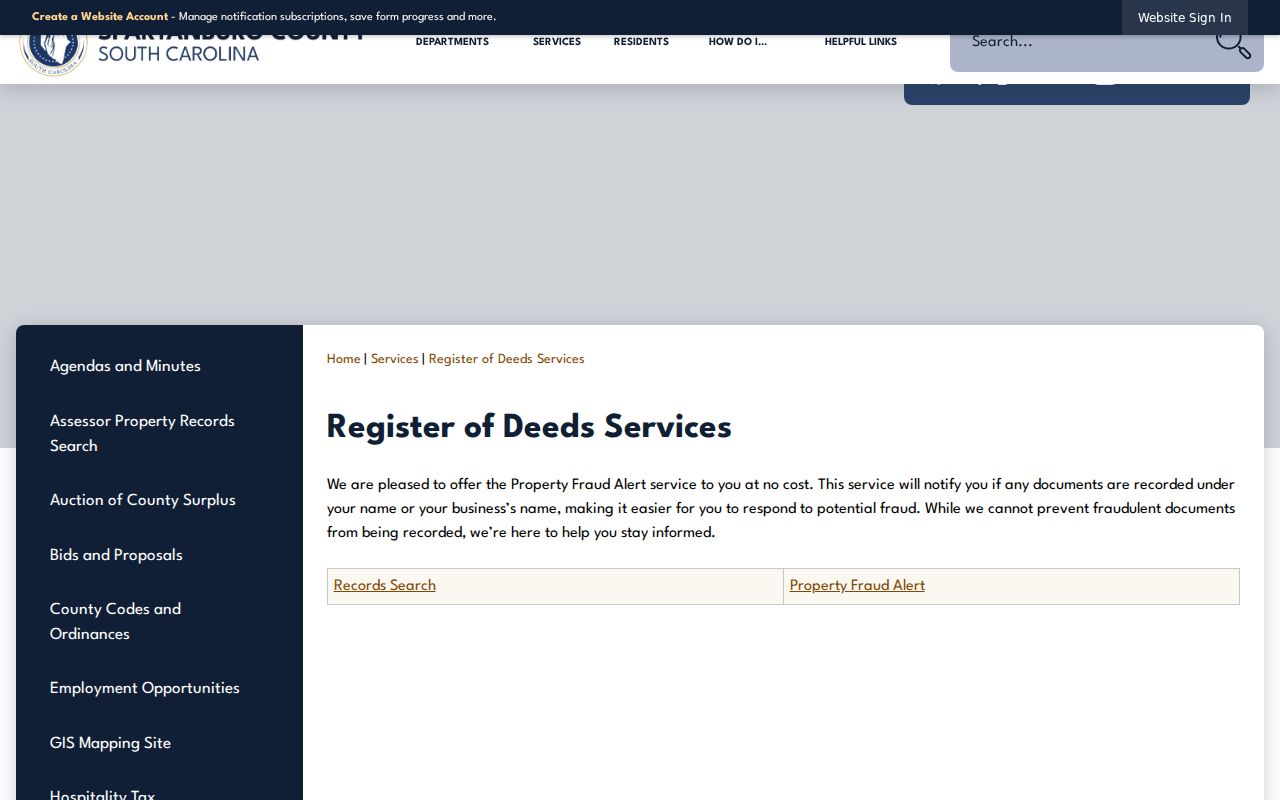
For Greenville-side parcels, the ROD page also links a Property Alert or FraudSleuth route. An alert is a reason to inspect a deed and its legal description, not a substitute for the county's recorded title evidence.